Network Security
DDoS Attacks in 2026: Botnets, Mitigation, Testing, and Resilient Infrastructure
A practical 2026 guide to DDoS attacks, botnets, mitigation, safe testing, incident response, and resilient infrastructure for websites, APIs, and critical services.
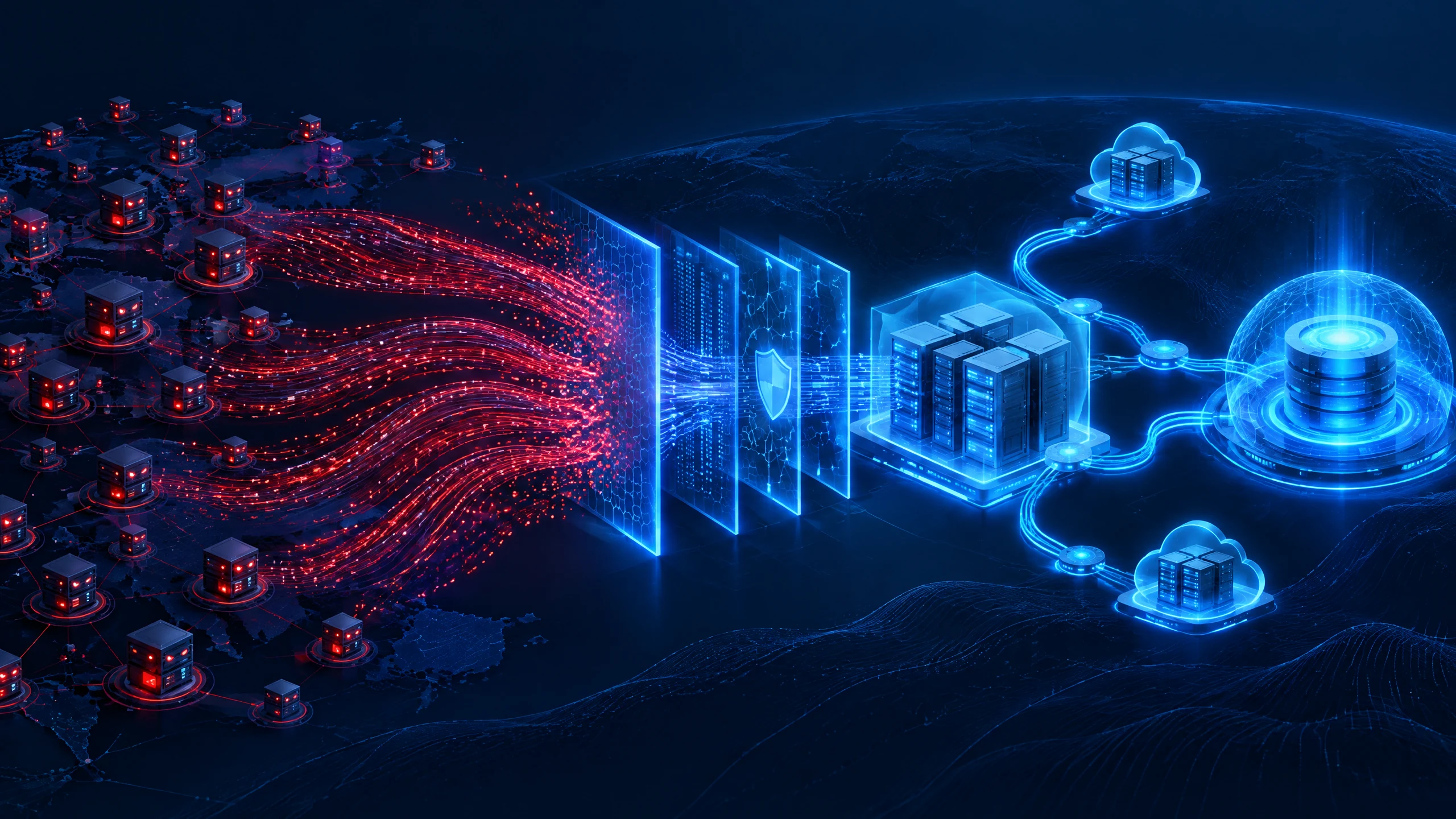
A DDoS attack in 2026 is best treated as an availability incident that can move across network, transport, application, and business-service layers. The strongest defense is not one filter or one vendor. It is a prepared system: measured capacity, protected origins, layered traffic controls, segmented dependencies, clear escalation paths, safe testing, and a response team that can make decisions under pressure. This guide explains volumetric, protocol, and application-layer attacks, then turns them into an operating plan for mitigation, testing, response, and learning. It avoids attack instructions. Exact Google Trends scores were unavailable, so qualitative signals from public guidance and threat reporting were used. **Key Takeaways** - **DDoS resilience is layered.** Network capacity, edge controls, application safeguards, origin protection, segmentation, and recovery procedures must work together. - **Botnets are not only a bandwidth problem.** Compromised IoT devices, cloud instances, and proxy networks can support both large floods and more selective application-layer pressure. - **Test safely and with permission.** Validate expected, peak, and flash-crowd behavior in an approved scope; use qualified providers for any network-layer simulation. - **During an incident, preserve service before chasing perfect attribution.** Confirm the signal, activate the runbook, protect critical functions, communicate, and record decisions. - **The post-incident review is part of mitigation.** Convert observed traffic, dependency failures, and response delays into specific engineering and process changes.
What a DDoS attack means in 2026
A distributed denial-of-service attack sends traffic or requests from many sources to exhaust a shared resource. That resource may be transit bandwidth, a firewall state table, connection capacity, CPU, memory, a database pool, an API quota, or a human support process. The visible symptom—slow pages or an unreachable service—does not reveal which layer is failing.
Modern services are interconnected: a public website may depend on DNS, identity, payment, messaging, analytics, and APIs. A flood against one endpoint can create secondary pressure elsewhere. Current reporting also describes compromised IoT devices, cloud resources, and proxy networks as botnet sources, with automation making traffic more adaptive. These are trend signals, not proof that every outage is an advanced attack.
Start with a service view. List public names, APIs, origins, administrative paths, and critical third parties for each user journey. Define availability realistically: a homepage that loads while login or payment fails is not full availability. See the [network security topic hub](/topics/network-security).
The three DDoS attack categories
### Volumetric attacks: consuming the pipe
Volumetric attacks attempt to overwhelm the amount of traffic a link, provider, edge device, or service can receive. They are commonly discussed at Layers 3 and 4 of the OSI model. The traffic may be direct or amplified through third-party infrastructure. The defensive question is simple: can unwanted traffic be identified and absorbed or discarded before it consumes the organization’s constrained capacity?
On-premises capacity alone may not be enough if the upstream connection saturates before local tools can act. Effective preparation includes upstream coordination, traffic visibility, resilient routing, suitable edge capacity, and a documented path to a DDoS mitigation provider or network operator. Avoid assuming that auto-scaling solves a bandwidth problem; scaling application servers does not create more transit capacity.
### Protocol attacks: exhausting network behavior
Protocol attacks abuse the work that network devices and servers perform to establish, track, or process connections. They can exhaust connection tables, stateful inspection resources, CPU, or other finite limits without generating the largest possible byte volume. A service may therefore look “under capacity” by bandwidth while still failing to accept legitimate connections.
Defenses combine sensible device limits, appropriate filtering, resilient load balancing, and monitoring of connection rates and errors. Test controls against normal behavior so emergency limits do not block legitimate users or monitoring.
### Application-layer attacks: making expensive requests
Application-layer DDoS attacks target a particular website function, API, search operation, login flow, or dynamic page. They may use ordinary-looking HTTP requests but trigger expensive computation, database queries, authentication work, or third-party calls. This is why an application-layer DDoS can be serious even when bandwidth appears normal.
Application defenses begin with a map of costly paths. Use authentication and authorization where appropriate, validate inputs, enforce per-client and per-identity quotas, cache safe content, bound expensive operations, and design graceful degradation. Rate limits should reflect legitimate use cases and should be observable, adjustable, and reversible. A single global limit is rarely suitable for every endpoint.
APIs deserve separate attention. Inventory public methods, authentication, request-size and concurrency limits, dependencies, and critical operations. Protect the origin from bypass and log enough context to distinguish abuse from legitimate demand while respecting privacy.
How botnets change the risk
A botnet is a collection of compromised or misused devices coordinated to send traffic. IoT botnets remain relevant because poorly secured cameras, routers, recorders, and other connected devices can be numerous and distributed. Cloud instances and proxy networks can add capacity or make sources harder to interpret.
An [IoT botnet and device-security primer](/articles/iot-security-botnets) can help teams connect DDoS planning with prevention on the devices they control. The priority is to reduce exposure, monitor unusual egress, remove default credentials, patch supported devices, disable unnecessary services, and separate unmanaged devices from sensitive systems.
Botnet traffic also explains why simplistic blocking can fail. Distributed sources may rotate, mimic normal clients, or vary request behavior. Source reputation can be useful, but behavior, identity, rate, geography, request cost, and session context should be considered together. Blocking an entire region or network may create more harm than the attack itself if the business serves legitimate users there.
Building a DDoS-resilient infrastructure
### Reduce and isolate the attack surface
Publish only what must be public. Keep management interfaces private where possible, protect origin addresses, restrict direct origin access, and separate public, application, data, management, and recovery networks.
[Network segmentation](/articles/network-segmentation-explained) is especially useful for limiting blast radius. It does not stop a DDoS by itself, but it can prevent an overloaded public service from consuming the same resources as identity systems, backups, administrative access, or internal operations.
### Put capacity and controls in the right place
Use edge capacity and upstream filtering for volumetric pressure; load balancing, caching, connection controls, and failover for infrastructure stress; and application-aware controls for expensive requests. No layer compensates for a missing one.
Define a minimum viable service. During pressure, serve cached pages, disable optional features, queue nonessential work, or apply stricter controls to login and transactions. Document these choices before an incident.
### Make dependencies visible
Measure requests, latency, saturation, errors, queues, connections, cache behavior, database use, and third-party response times. Establish baselines for peaks and releases. Alerts should distinguish a service-wide failure from one endpoint or dependency.
Resilience includes people. Keep current contacts for providers, DNS operators, responders, legal, communications, and business owners. A control nobody can activate is not dependable.
DDoS mitigation before, during, and after an incident
### Before: prepare a small, usable runbook
The runbook should name the incident lead, technical decision-maker, communications owner, and escalation contacts. Include service maps, dashboards, approved changes, rollback steps, evidence expectations, and status language. Rehearse it with operations, security, and support.
Combine upstream or edge filtering, web and API controls, origin restrictions, caching, safe rate limits, authentication, segmentation, backup communications, and tested recovery. Check that DNS, certificates, identity, observability, and support tooling remain reachable if the application is impaired.
### During: stabilize first, investigate in parallel
Confirm the symptom and identify the affected service, time window, region, and layer. Check deployments, dependency outages, routing changes, and capacity events that can resemble a DDoS. If evidence supports abuse, activate the runbook and contact upstream mitigation early.
Prioritize safety, essential operations, authentication, and transactions. Apply the smallest effective control, observe its effect, and record approvals. Avoid indiscriminate blocking, unreviewed firewall changes, or exposing origins.
Communicate on a predictable cadence. Internal updates should state what is known, impact, and the next decision. External updates should be accurate without publishing bypass details.
For the first hour, use the organization’s [incident response first-hour guide](/articles/incident-response-first-hour) alongside the DDoS-specific runbook. If the event includes extortion, credential theft, malware, or suspected intrusion, treat it as more than an availability incident and expand the investigation.
### After: recover deliberately
Do not remove emergency controls simply because traffic falls. Confirm legitimate traffic, healthy dependencies, drained queues, and stable monitoring. Roll back in order, preserve logs and timelines, and verify origin protection.
A DDoS can distract from another intrusion, but it can also be only a DDoS. Preserve evidence and assess facts. If ransomware or another path appears, use [ransomware attack-path guidance](/articles/ransomware-attack-paths).
Safe DDoS testing without creating a new incident
Testing should answer a business question: can the service remain usable during an approved surge, and can the team detect, decide, mitigate, communicate, and recover? It must not generate uncontrolled traffic.
Start in non-production with rate limits, caching, autoscaling, queues, health checks, dashboards, alerts, and failover. Then run controlled tests with authorized sources, agreed profiles, ceilings, a maintenance window, and an immediate stop condition. Include peak and flash-crowd behavior.
Network- and transport-layer simulation requires special care. Obtain written authorization from affected owners and providers, use a qualified arrangement, confirm contract and acceptable-use permissions, and pre-coordinate with operations. Never test third parties or public infrastructure; if risk cannot be bounded, choose a tabletop or contained test.
After each test, record alerts, response, origin protection, legitimate-client impact, and escalation. A test is complete only when findings become tracked improvements.
Eight-step DDoS response checklist
Use this safe checklist as a compact decision aid. Adapt it to your environment and approvals.
1. **Confirm the signal.** Check availability, latency, errors, traffic shape, recent changes, and dependencies before declaring an attack.
2. **Classify the pressure.** Decide whether the primary symptom is volumetric, protocol-related, application-layer, dependency-related, or a combination.
3. **Activate the runbook.** Assign an incident lead, technical owner, communications owner, scribe, and escalation path.
4. **Protect critical functions.** Preserve safety, authentication, transactions, and essential public information; gracefully degrade optional features.
5. **Engage upstream help.** Contact the network, hosting, edge, or mitigation provider using the pre-approved emergency route.
6. **Apply measured controls.** Use authorized filtering, rate limits, caching, access controls, or failover; observe impact and keep rollback steps ready.
7. **Communicate and document.** Share time-stamped updates, customer guidance, decisions, approvals, and evidence-handling instructions.
8. **Verify recovery and learn.** Confirm stable legitimate service, remove temporary controls carefully, preserve evidence, and schedule the post-incident review.
Post-incident review: turn downtime into resilience
Hold the review while timelines are fresh. Ask what users experienced, what saturated first, which alert fired earliest, how long escalation took, and where recovery slowed.
Separate technical findings from organizational findings. Technical work may cover origin protection, capacity, endpoint design, caching, segmentation, and telemetry. Organizational work may cover authority, contacts, messaging, contracts, and testing.
Track each action with an owner, due date, success measure, and validation method. Re-test the weakness rather than declaring the program complete.
FAQs
### What is the difference between a DDoS attack and a botnet?
A DDoS attack is the attempt to make a service unavailable through distributed traffic or requests. A botnet is one possible source of that traffic: a coordinated set of compromised or misused devices. Not every DDoS uses a classic botnet, and botnet defense also requires protecting devices that may be abused to attack others.
### Is a CDN enough for DDoS mitigation?
A CDN or edge network can absorb some traffic, especially for cacheable content, but it is not a complete plan. APIs, dynamic requests, DNS, identity, origins, and dependencies need separate controls and testing. Confirm coverage and emergency escalation.
### How often should an organization test DDoS resilience?
Use a risk-based schedule. Review runbooks and contacts regularly, test controls after major architecture or provider changes, and run controlled load or resilience exercises before important launches or predictable high-demand events. Repeat a test when a prior finding has been fixed so the improvement is demonstrated rather than assumed.
### Should teams block all traffic from a suspicious country or network?
Only when the business, legal, and operational impact is understood and the measure is approved. Broad blocks can exclude legitimate users and may not stop distributed traffic. Prefer the narrowest effective control, monitor false positives, and keep a rollback path.
### Where should a public-service operator start?
Begin with a service inventory, incident lead, upstream contacts, minimum viable service, protected origins, and a tested first-hour checklist. See the [public-service DDoS guide](/articles/public-service-ddos).
Conclusion
A DDoS attack 2026 plan should be practical enough to use during a stressful outage. Classify the pressure, protect the most important service functions, use layered DDoS mitigation, and rely on measured controls rather than improvised blocking. Treat IoT botnet DDoS and application-layer DDoS as different operational problems, while preparing for hybrid events that cross several layers.
The durable goal is website resilience: a service that can absorb pressure, degrade safely, recover predictably, and improve after every exercise or incident. Build that capability before the next alert, document who can act, and test only within an approved and controlled scope.
Cover-image brief
Create a wide, text-free editorial illustration of resilient digital infrastructure under a controlled traffic surge: layered blue and charcoal network nodes, a bright protected service core, distributed edge points absorbing red-orange pulses, and clearly separated internal zones. Show calm, engineered stability rather than destruction. No words, labels, logos, interface screenshots, weapons, or attack instructions. Use a professional cybersecurity publication style with strong contrast and enough negative space for cropping.
Limitations
- Guidance and regulations can change; verify current advisories and organizational applicability before acting.
Evidence sources
- cisa.gov — Cybersecurity and Infrastructure Security Agency, FBI, and MS-ISAC, “Understanding and Responding to Distributed Denial-of-Service Attacks” (2024)
- docs.aws.amazon.com — Amazon Web Services, “AWS Best Practices for DDoS Resiliency” whitepaper
- akamai.com — Akamai, “Apps, APIs, and DDoS 2026”
- blog.cloudflare.com — Cloudflare, “Introducing the 2026 Cloudflare Threat Report”
- nist.gov — National Institute of Standards and Technology, “Cybersecurity Framework 2.0”